A website that cost money but could not do its job
Tom Ravert is a real estate executive and author. He wanted his website to help readers discover his books, learn from his articles, and contact him about speaking, consulting, and other opportunities.
Based on Tom's records and recollection, more than $10,000 had been spent across the domain, protection plans, platform costs, and outsourced website development. Four years after acquiring the domain, he was left with a half-finished site and no attributable website leads.
The site had no working growth loop
The problem was larger than the visual design. Important parts of the business were disconnected or missing.
- The site was difficult to find through Google, and no useful search reporting was in place to explain why.
- Visitors could read about the book, but there was no clear path from the site to a retailer where they could buy it.
- Publishing an article required asking a developer to create and format another page.
- Contact inquiries were not organized in one place with notes, ownership, or follow-up status.
- Tom could not see which pages attracted readers or which traffic sources produced inquiries without visiting other analytics tools.
What Tom actually needed
He did not need another website that only looked finished. He needed one system that supported the full path from writing an idea to starting a business conversation.
A clearer public website
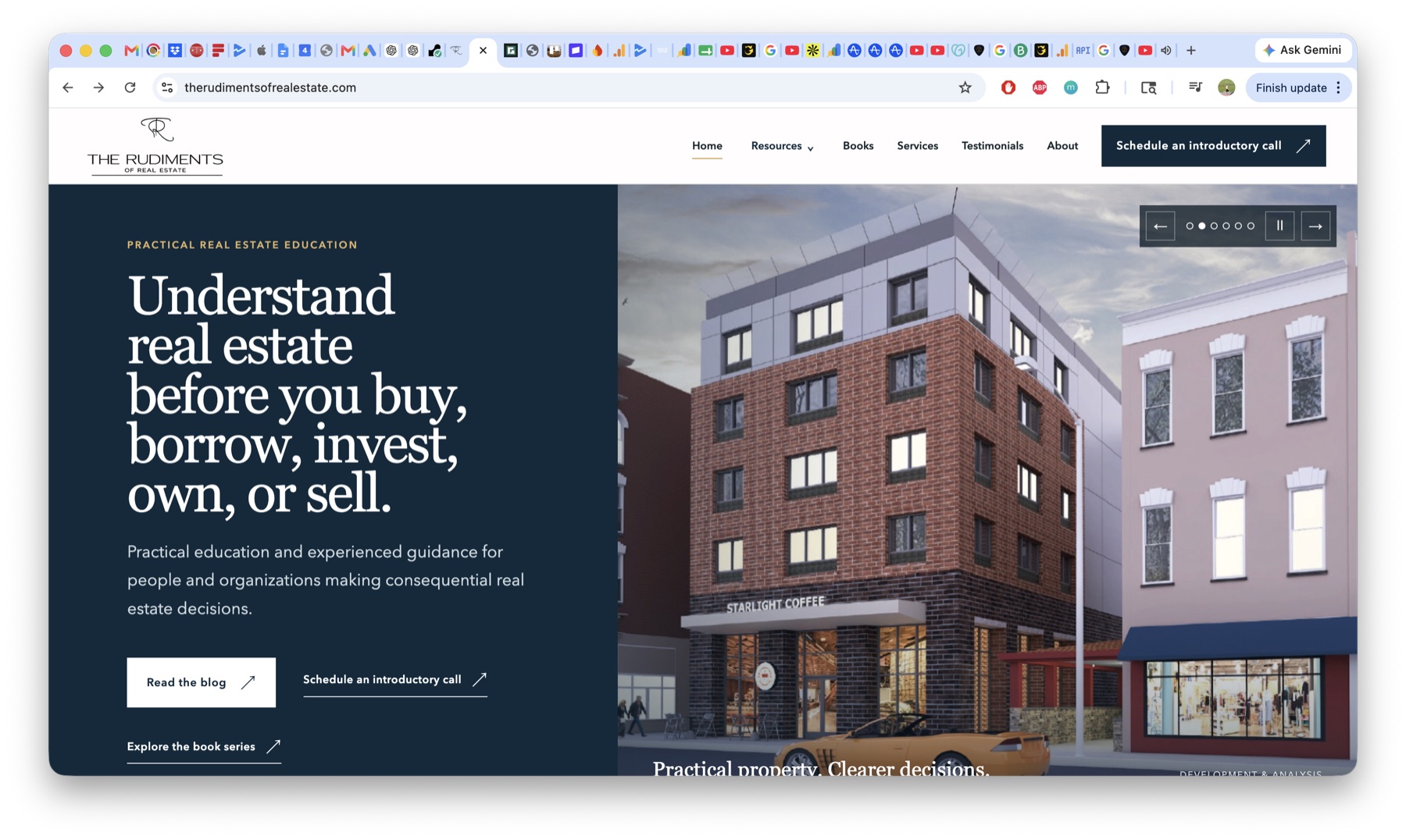
The new site explains Tom's expertise, gives visitors clear paths to his books and articles, and makes the next step obvious for someone who wants his help.
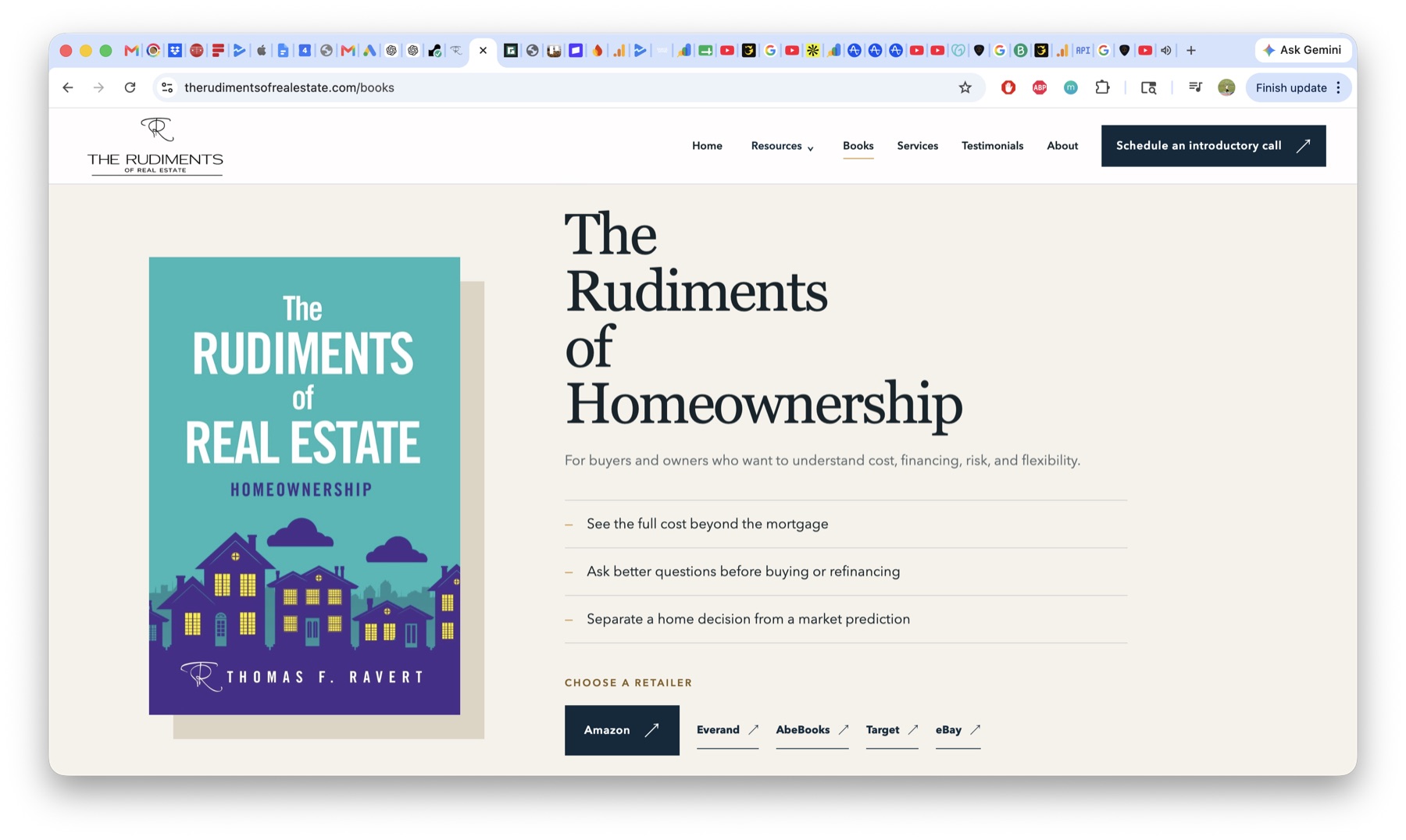
The book page now sends readers directly to Amazon, Everand, AbeBooks, Target, or eBay. The website does not need to become a separate online store to help a visitor complete the next step.
The operating system
An admin workspace built around Tom
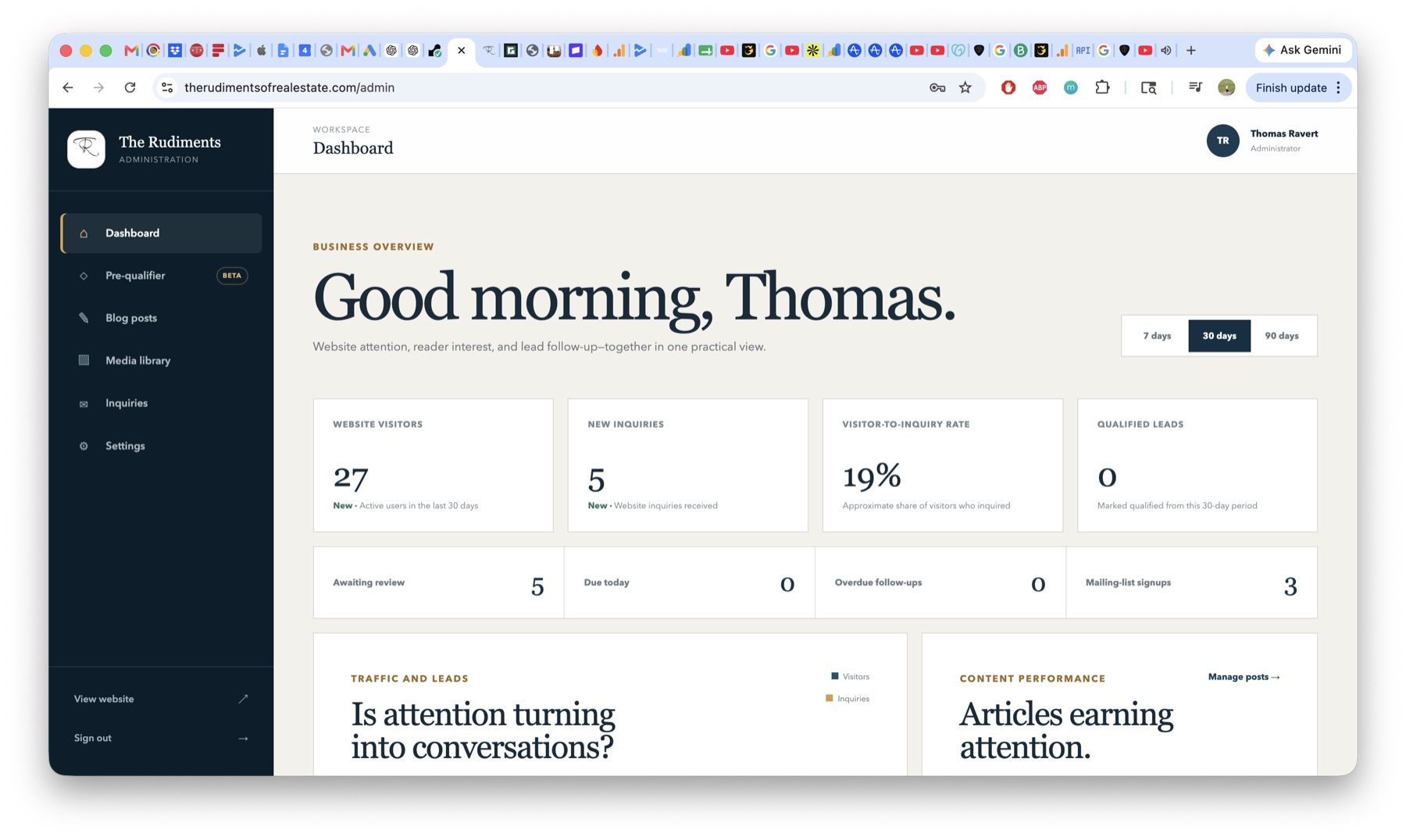
The most important part of the project sits behind the public website. Tom now has one private workspace for publishing, lead follow-up, and performance reporting.
Article publishing
Write, edit, preview, and publish articles without waiting for a developer to create a page.
Media library
Upload images and charts once, then place them inside an article where they support the argument.
Built-in CRM
Review inquiries, add notes, change lead status, and keep the next follow-up visible.
Plain-English analytics
See visitors, inquiries, conversion rate, traffic sources, and the articles earning attention.
Monday recap email
Receive a weekly summary of website activity and lead status without signing in to another platform.
The workflow changed on day one
| Before | After launch |
|---|---|
| A developer had to create each article page. | Tom can publish articles from his own dashboard. |
| The book had no clear purchasing path. | Readers can choose a retailer directly from the book page. |
| Inquiries were disconnected from follow-up. | Every inquiry can be reviewed, noted, and moved through a lead status. |
| Website performance required outside tools. | Traffic, content, and lead information appear in one readable view. |
| There was no regular performance summary. | A Monday email provides a quick weekly recap. |
Client review
What the client had to say
I cannot say enough positive things about my experience working with Mike Ravert and Ravert Systems.
Before Mike became involved, I had spent nearly two very frustrating years trying to get my website, The Rudiments of Real Estate, to work the way I originally envisioned it. Despite spending almost $20,000 on the original development, the site generated virtually no traffic, and I continually struggled to communicate to the original developer what I was trying to accomplish. I had a clear vision for the website: an educational platform for real estate, a place to publish useful content, build an audience, generate inquiries, and support my books and other work. But the finished product simply wasn't functioning the way I needed it to.
Mike changed that.
In approximately three weeks, he was able to understand what I had been trying to accomplish for the previous two years and turn that vision into a website that finally looks, feels, and functions the way I wanted it to. Even more impressive, he accomplished it at a fraction of what I had already spent.
What impressed me most was that Mike did much more than simply redesign a few pages. He thought through how the entire website should operate as a business and educational platform. The public site is now clean, professional, easy to navigate, and consistent with the identity of The Rudiments of Real Estate.
Behind the scenes, he also created an administrative system that makes the site practical for me to operate. I can now monitor website visitors and inquiries, track qualified leads, review trends, manage inquiries and follow-up activity, publish and preview articles, upload photographs and charts, manage a media library, and see which content is attracting attention. He also built a weekly business recap that summarizes visitors, leads, mailing-list growth, follow-ups, popular articles, and traffic sources.
Mike also made the system understandable for someone who does not want to become a website developer. He created a detailed operating guide explaining how to manage leads, publish articles, use the media library, review analytics, and handle routine website administration. That attention to detail says a great deal about the way he works. He wasn't simply interested in finishing the project; he wanted to make sure I could actually use what he built.
Perhaps most importantly, Mike listened. He took the time to understand what I was trying to create rather than trying to force my ideas into a predetermined website template. After two years of frustration, that was an enormous difference.
The contrast is remarkable: after nearly two years, almost $20,000 spent, and very little to show for it, Mike delivered essentially everything I had been trying to accomplish in about three weeks, and at a fraction of the cost.
I would enthusiastically recommend Mike Ravert and Ravert Systems to anyone who needs a website developer who combines technical ability with common sense, responsiveness, attention to detail, and, most importantly, the ability to understand what the client is actually trying to accomplish.
Mike didn't just improve my website. He finally turned it into the platform I had envisioned from the beginning.
Launch status
The outcome is operational first
The rebuilt site launched in August 2026. It is too early to make responsible claims about long-term traffic, leads, book sales, or revenue.
What is already measurable is the change in capability: Tom can publish without a developer, visitors can reach a book retailer, inquiries have a follow-up system, and website performance is visible in one place.
This case study will be updated as 30-, 60-, and 90-day data becomes available.
What we are measuring next
- Google indexing, impressions, and organic clicks
- Visitor-to-inquiry conversion rate
- Which articles attract the right readers
- Clicks from book pages to retailers
- How many inquiries become qualified conversations
- Lead response time and follow-up progress
Those numbers will show whether the new system is doing more than looking better. They will show whether it is helping Tom build an audience and create opportunities.
Free assessment
Is your website creating work instead of opportunities?
The free Business Efficiency Assessment helps you identify the manual work, disconnected information, and missed follow-up that may be costing your business time and money.
Take the Free Business Efficiency Assessment