Publishing was the bottleneck
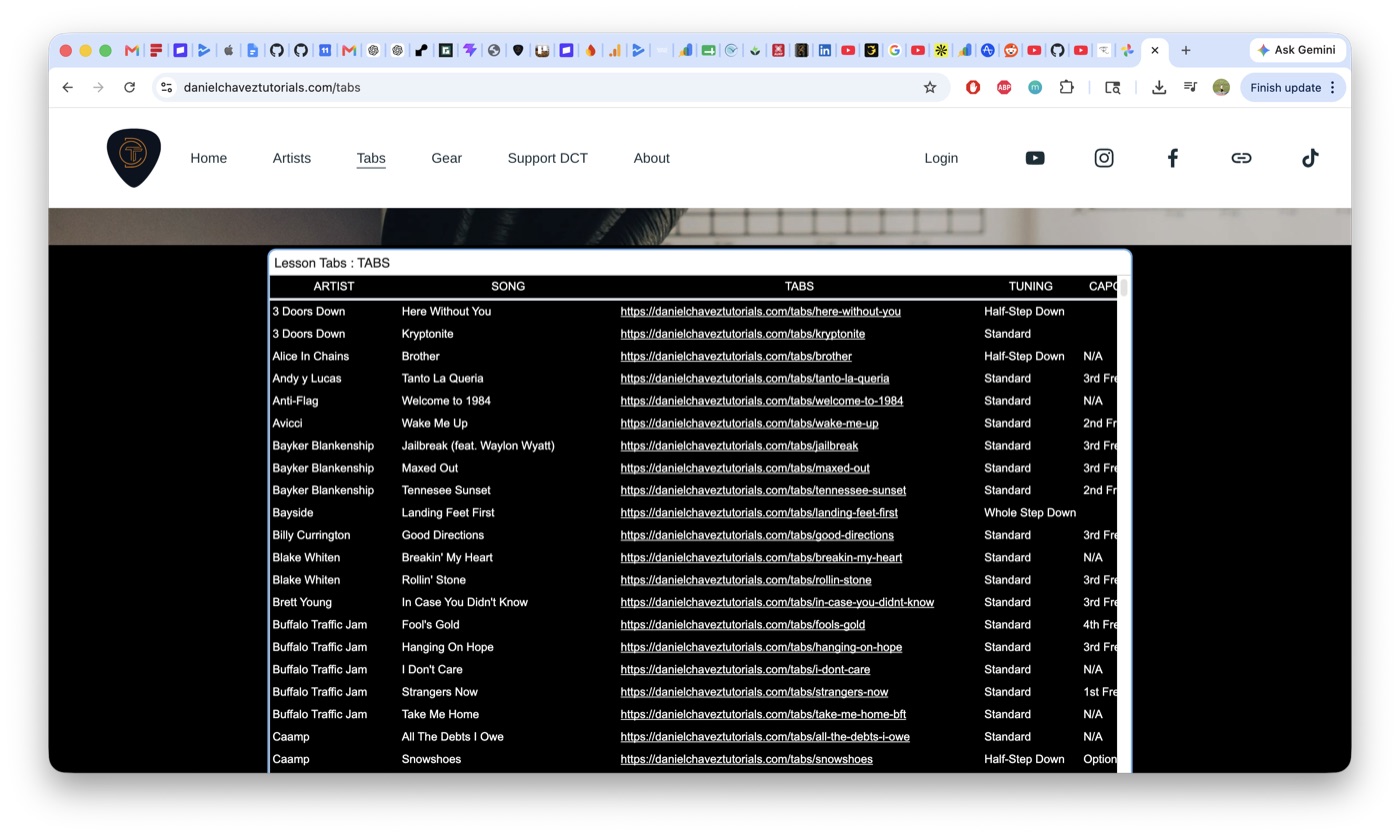
A guitar instructor with more than 25,000 YouTube subscribers had built a library of over 600 guitar tabs.
Every lesson started life as a Google Doc. A separate Google Sheet tracked the status of every song: whether it was still being written, had a video recorded, or was ready to publish.
That workflow actually worked really well.
The problem started after a lesson was finished.
Getting it onto the website became a completely separate project.
The publishing process
When a tab was ready, it could not simply be uploaded. First, a new page had to be created manually inside Squarespace. The Google Doc then had to be embedded with an iframe so students could read it online.
If it was the first song for an artist, an artist page had to be created too. If it was also the first song from an album, that meant another page, artwork found online, and more links added to the site navigation.
Every finished lesson triggered the same checklist:
- Create Squarespace page
- Embed Google Doc using an iframe
- Create artist page if necessary
- Create album page if necessary
- Find album artwork
- Link artist pages
- Update navigation
- Verify everything manually
None of these steps were particularly difficult. The problem was that they happened every single time a new lesson was published.
Twenty minutes became thirty. Thirty minutes became hours every month. Hundreds of lessons later, that invisible work had become one of the biggest costs of maintaining the website.
Measurable impact
What the old process cost every year
At roughly 120 new lessons per year, spending 20-30 minutes publishing each one would consume 40-60 hours every year.
That gives the instructor five to seven and a half full workdays back every year. Over ten years, it adds up to 50-75 workdays spent creating lessons and serving students instead of maintaining pages.
The mobile problem
There was another issue that was not obvious until students started using the site. The Google Docs were embedded inside an iframe because Squarespace had no better way to display them.
On desktop, this mostly worked. On mobile, which was how most students visited the site, the iframe squeezed each document into a narrow window that made guitar tabs extremely difficult to read.
The publishing workflow was not just creating extra work behind the scenes. It was creating a worse experience for customers.
The New Workflow
Instead of asking how to make Squarespace faster, we asked a different question: Why was anyone rebuilding pages manually in the first place?
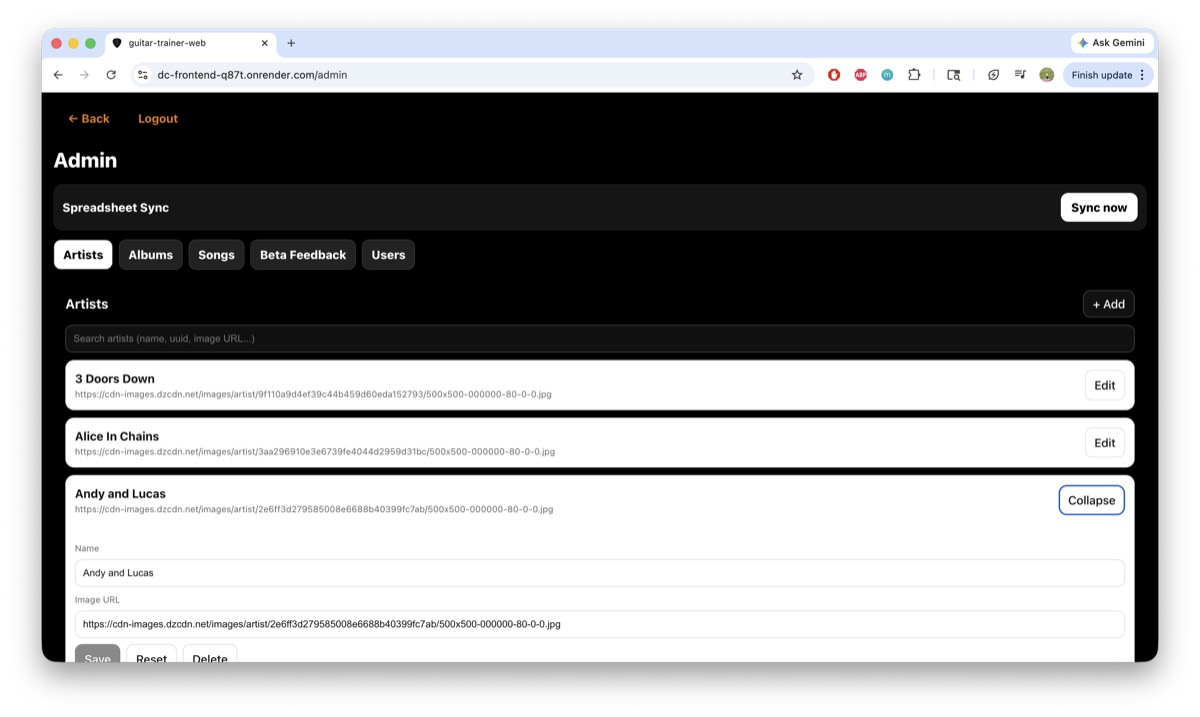
The spreadsheet already contained almost everything needed to publish a lesson. So instead of copying information into the website, we built a system that let the website read directly from that source of truth.
The workflow now:
- Reads the master spreadsheet
- Imports only new tabs
- Stores the data
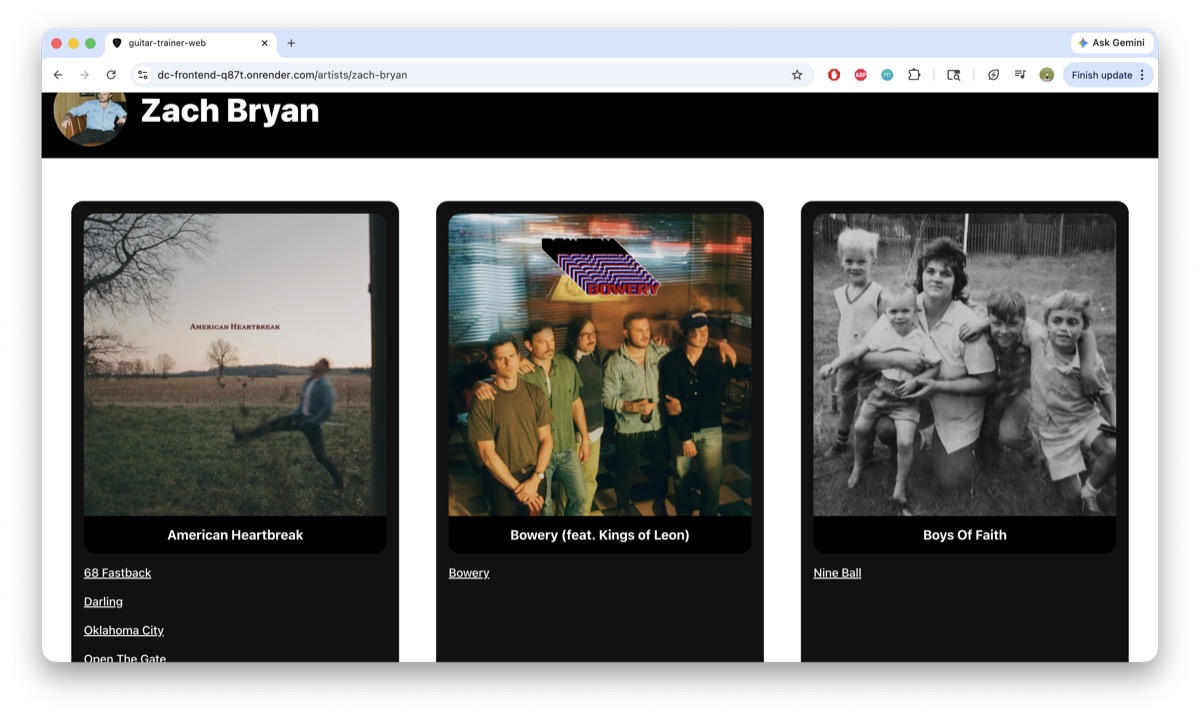
- Automatically organizes artists
- Automatically organizes albums
- Retrieves artwork
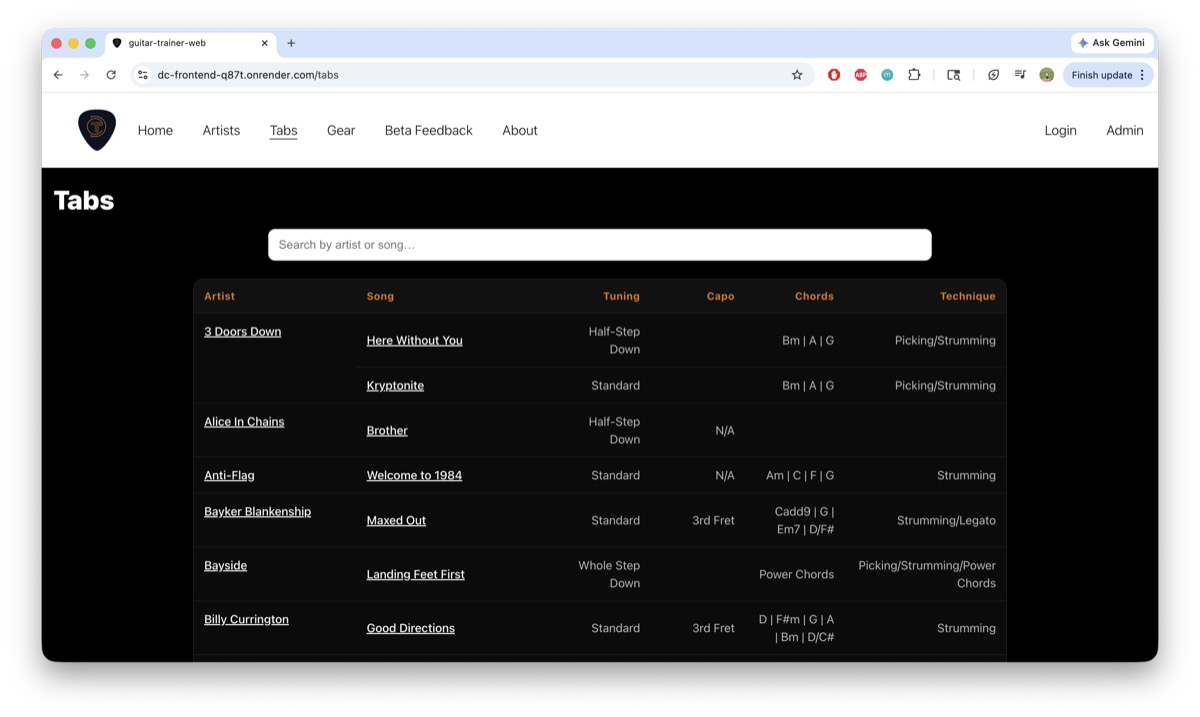
- Builds pages dynamically
- Publishes immediately
During each sync, the system checks whether an artist or album already exists. If not, it creates the records, retrieves the artwork from external music databases, and organizes everything into the correct structure.
The instructor no longer has to think about artist pages, album pages, artwork, or navigation. They simply write lessons.
The mobile experience improved too
Instead of embedding Google Docs inside an iframe, the system reads the document text directly and displays it in the site.
- Responsive layout
- Faster loading
- Mobile-friendly tabs
- Better accessibility
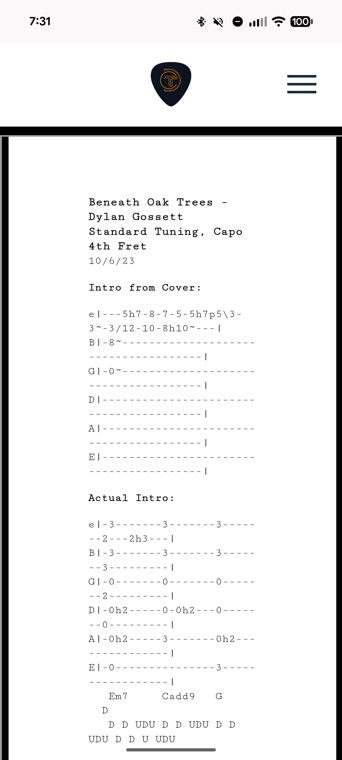
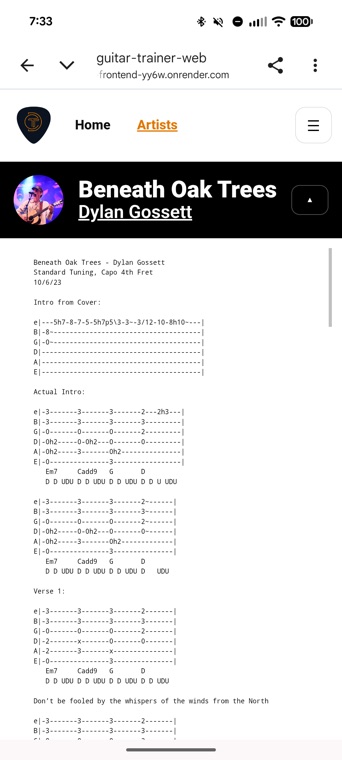
The business did not need to throw away Google Docs or Google Sheets. The opportunity was removing the repetitive work happening between those tools and the website.
Opportunities created by owning the platform
The goal was not just automation. Once the site was custom built, it became possible to add features that were not practical before.
- User accounts
- Monthly subscriptions
- Premium memberships
- Auto-scrolling tabs
- Built-in metronome
- Future lesson tracking
- Favorites
- Progress tracking
Owning the platform created opportunities for entirely new products and recurring revenue.
Results
| Before or after | Outcome |
|---|---|
| Before | 20-30 minutes per published tab |
| Before | Manual artist creation |
| Before | Manual album creation |
| Before | Manual page updates |
| Before | Poor mobile experience |
| Before | Limited monetization |
| After | One-click publishing |
| After | Automatic organization |
| After | Responsive mobile tabs |
| After | No manual page creation |
| After | Premium subscriptions |
| After | Better customer experience |
Client review
What the client had to say
I run a website that gives guitarists access to sheet music to learn their favorite songs.
I had been using Squarespace for a couple of years thinking their point and click interface would be easy to manage. It wasn't long before I realized I was in over my head and my webpages started becoming disorganized or non-functional. I tried using Chat-GPT to write code for basic automation that was supposed to simplify things, but it just made managing the pages more difficult. I couldn't remember which scripts pulled from which document and eventually gave up and went back to manually organizing each webpage. The repetitive and tedious steps to work on each page takes time away from being able to produce more content for my viewers.
Mike from Ravert Systems listened to my issues and immediately thought of solutions to truly automate my workflow. Now I can create the sheet music and push a button for everything to be readily available on the site in a consistent, organized format on my website. No more duplicating pages and making changes to the underlying code on each page. Mike was also able to add things from my “wish list” that would enhance the user experience for my paid subscribers (i.e., auto-scroll, metronome, favoriting pages) while making the product page and transaction experience easy to use.
I would highly recommend using Ravert Systems if you're finding yourself spending time on menial tasks when you could be focusing on what's important.
TL;DR - Thought I could do it myself, was in over my head. Ravert Systems provided a solution and now I can focus on what matters.
The bigger lesson
We didn't replace the tools
Businesses often assume they need completely new software. In reality, most already have tools that work well.
In this case, Google Docs was perfect for writing tabs. Google Sheets was perfect for tracking progress. The problem was not either tool. The problem was everything happening between them.
Instead of asking the instructor to learn a completely new system, we connected the tools they already knew and automated the repetitive steps around them. That is usually the better long-term solution.
Free assessment
What repetitive workflow exists in your business?
Every growing business has processes that slowly become more manual over time.
Sometimes the solution is not replacing your software. It is connecting the software you already use and removing the manual steps in between.
Get a Free Workflow Assessment